An ESD Perspective on 'Green' Buildings

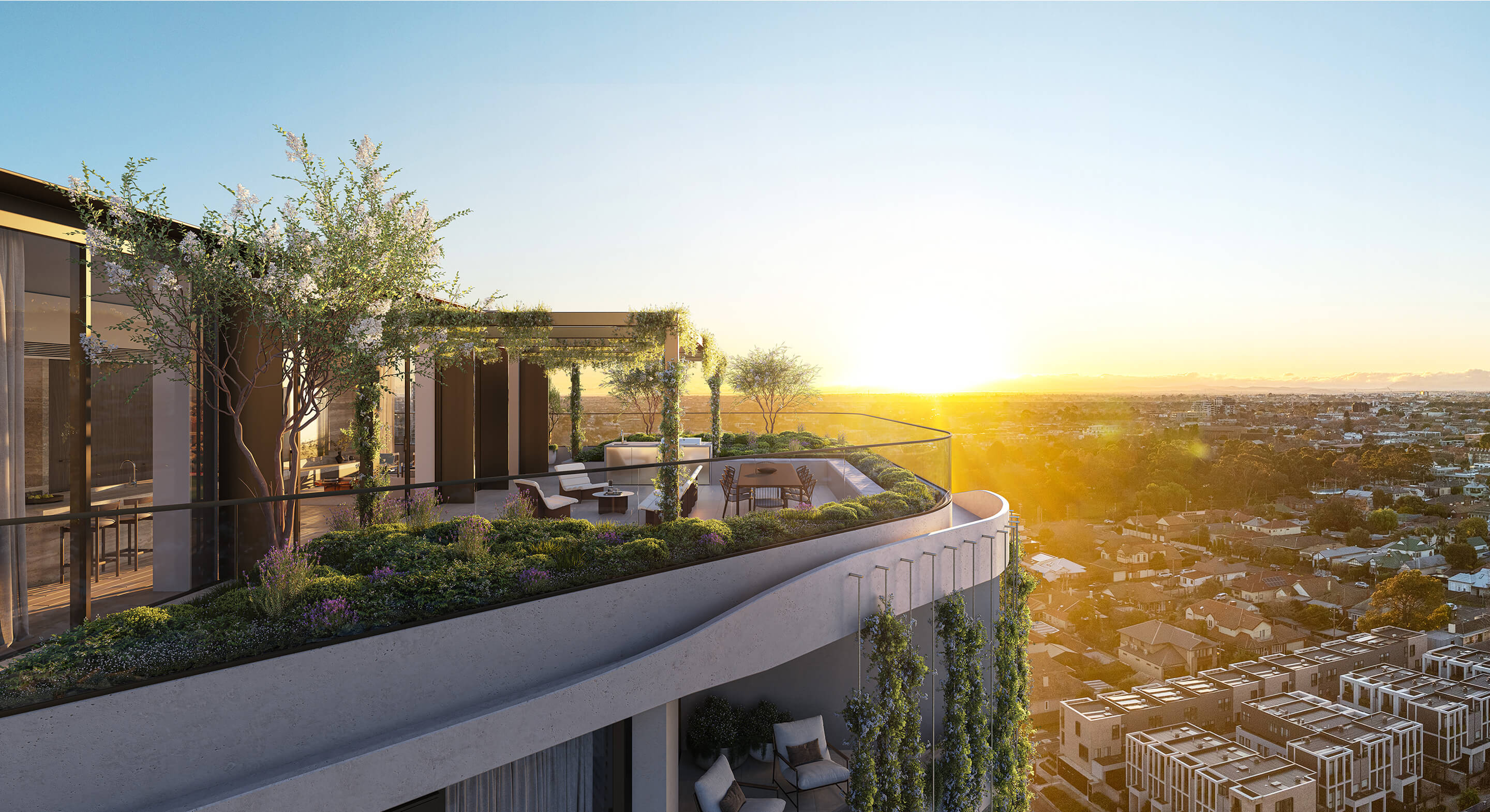
Scotch Hill Gardens, Hawthorn: a Hamton development, targeting Nature Based Cities Exemplary Performance, with ESD consulting by Ark Resources.
- The gap: Australia's leading environmental rating tools reward energy efficiency but rarely require trees, biodiversity or meaningful green space.
- National recognition: Ark Resources founder Jan Talacko was featured in a national industry article as a Nature Based Cities Advisory Council member, speaking to that gap.
- On the ground: ESD Advisor Helen Maas, who has led NBC accreditation for developments including Scotch Hill Gardens and The Eveline, shares what closing that gap actually takes in practice.
A high sustainability rating tells you a lot about a building's energy and carbon performance, and very little about whether it will actually feel green to live in. That distinction was the subject of recent national industry coverage, which included comment from Ark Resources founder Jan Talacko. Here, we add our own perspective from the project delivery side, with ESD Advisor Helen Maas.
As ESD consultants, we spend most of our time on the metrics that rating tools measure directly: thermal performance, energy loads, embodied carbon. Those metrics matter, and NatHERS, Green Star and NABERS have genuinely lifted the bar on them over the past decade. What they were never designed to measure is what happens outside the building envelope. Whether a site retains mature trees, supports biodiversity, or gives residents somewhere green to actually spend time is left almost entirely to the judgement of individual project teams.
Nature Based Cities exists to close that gap. It is not a substitute for the ratings we already work with, but a parallel framework that asks developers to plan for ecology, canopy cover and living landscape as deliberately as they plan for energy compliance, starting at concept design rather than being bolted on once a scheme is locked in. It is a distinction we increasingly raise with clients ourselves, well before a project reaches the stage where those choices get harder to make.
National CoverageJan Talacko on the Missing Piece
Jan Talacko, founder of Ark Resources and a member of the Nature Based Cities Advisory Council, was invited to comment for the piece. His view, drawn from 25 years advising developers, architects and planners, is that the industry has made faster progress on carbon than it has on nature.
Whilst we are making steady progress in relation to energy and carbon emissions from buildings, there has been much less emphasis on encouraging biodiversity and tackling the urban heat island effect. The Nature Based Cities initiative responds to a gap in the suite of tools currently used by the property development sector, which don't provide sufficient incentive, or recognition, for the integration of landscaping and greenery.
Jan Talacko, Founder, Ark Resources & Nature Based Cities Advisory Council MemberTalacko has spent 25 years working across the property sector, and describes his approach as a pragmatic one: sustainable design should meet environmental expectations while also improving the everyday amenity of a place. That pairing, of measurable performance and liveability, sits behind Ark Resources' own ESD advice on projects nationally.
Project DeliveryWhat Accreditation Looks Like in Practice
National coverage is one measure of how far the conversation has come. What it cannot show is what closing the gap actually takes on a live project, from concept design through to construction. That is where Ark Resources ESD Advisor Helen Maas comes in.

"Achieving NBC accreditation involves thinking about how the built form and occupied spaces will integrate with the living landscape from the earliest design stages. It's not just the bigger site planning decisions that contribute to accreditation, but also the smaller details."
Maas has led the Nature Based Cities accreditation process on several Ark Resources projects, working alongside architects and landscape teams to build ecology, canopy and biodiversity outcomes into the design from the outset rather than retrofitting them once a scheme is locked in. On Scotch Hill Gardens in Hawthorn, that meant mapping every tree on site early and designing around them: all existing high value trees, and at least half of the site's moderate value trees, are being retained or relocated, with early planning also allowing space for new large and habitat trees. The result is canopy coverage well above the development's 20 per cent target.
at Scotch Hill Gardens
on the same site
at The Eveline
at The Eveline
The same thinking carries down to a much smaller scale on The Eveline in Moonee Ponds, where more than one in five apartments has been designed with its own fixed, irrigated garden bed, giving residents private green space rather than relying solely on shared amenity areas, alongside vertical greening built into the lower facades.
Most developments only turn to greenery or landscaping once a design is largely locked in, by which point the options that remain are limited. Setting those targets on day one changes what is possible: the project team can work through the ten criteria in the NBC scorecard and decide what suits the site, whether that means retaining existing trees, specifying more indigenous species, or building in a more diverse planting palette. It is that same scorecard, with its tiered criteria, that separates a Commended rating from an Exemplary one.

Beyond the Rating
From where we sit, the conversation with clients is shifting. A star rating used to be the headline outcome a developer would ask us to chase. Increasingly, it is one part of a broader brief that also asks what a site will look and feel like once it is built, and whether the landscape strategy can be independently verified rather than left to marketing copy.
Ark Resources works across both sides of that brief: the compliance work that NatHERS, Green Star and NABERS require, and the nature based design that Nature Based Cities accreditation is built to recognise. Talacko's comments and Maas's project experience reflect the same view from two different vantage points, one from the industry stage, the other from the drawing board.
Get in touch with our team

Our ESD Services
Source: Apartments.com.au: What Does It Really Mean for a Building to Be Green?